

If you’ve started noticing forehead creases when you raise your eyebrows, or deep lines forming around your nose and mouth, you’re likely already researching your options. Two names keep coming up: Botox and Juvederm.
Both are non-surgical, take only minutes, and can take years off your appearance. But they work in completely different ways, and choosing the right one depends on what you’re actually trying to address.
Keep reading to learn how each treatment works, what it’s best suited for, and how to figure out which one makes sense for your skin.
How Does Botox Work?
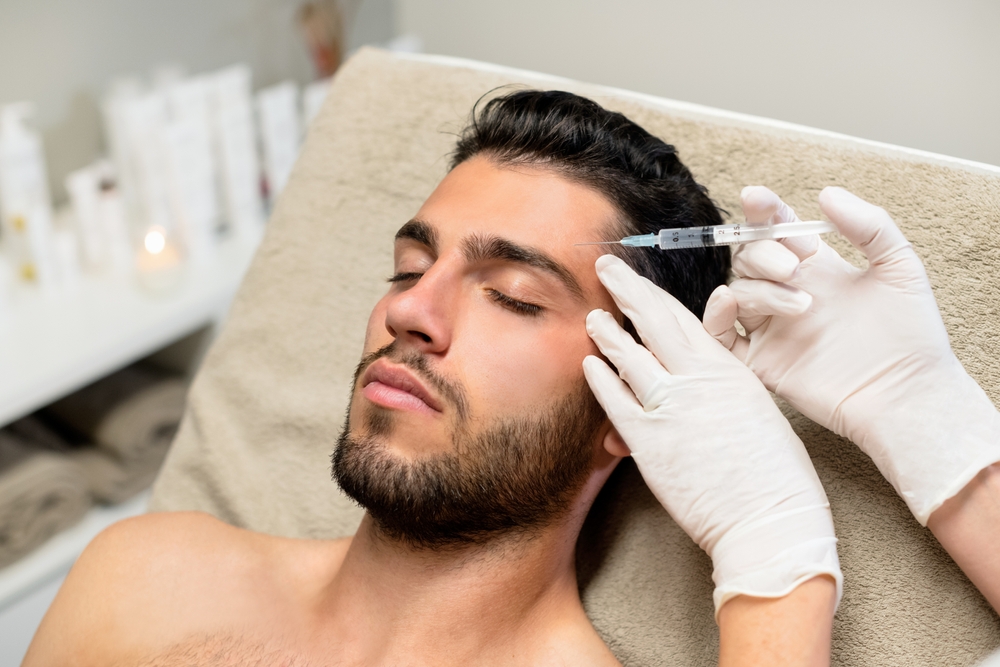
Botox is a neuromodulator, not a filler. Rather than adding volume to the skin, Botox works by temporarily blocking the nerve signals that tell certain facial muscles to contract. When those muscles relax, the skin above them smooths out, and the lines caused by repeated movement begin to fade.
Results from a Botox treatment typically become visible within three to five days. Most patients see the full effect within two weeks, and results generally last about four months, after which many choose to return for follow-up treatment.
Botox Cosmetic is FDA-approved and has a well-established safety profile when administered by a qualified provider. At South Texas Eye Institute, Dr. Lisa Martén completed specialized training with one of the top injectors in the country, bringing both precision and experience to every treatment.
What Botox Treats Best
Botox is most effective on dynamic wrinkles, which are the lines that form from repeated facial movement over time. Common treatment areas include horizontal forehead lines, crow’s feet at the outer corners of the eyes, and vertical frown lines between the eyebrows. If the lines you’re concerned about appear or deepen when you make expressions, Botox is often the right tool.
What to Expect During and After Treatment
The injection process takes about 10 minutes. No anesthesia is required, though a topical numbing cream or cold pack may be applied beforehand for comfort.
There’s no recovery time, so most patients return to their regular routine the same day. For the first 24 hours after treatment, it’s best to avoid heavy exercise, rubbing the treated area, and lying flat. Temporary side effects such as mild redness, tenderness, or swelling at the injection site are common and typically resolve quickly.
How Does Juvederm Work?
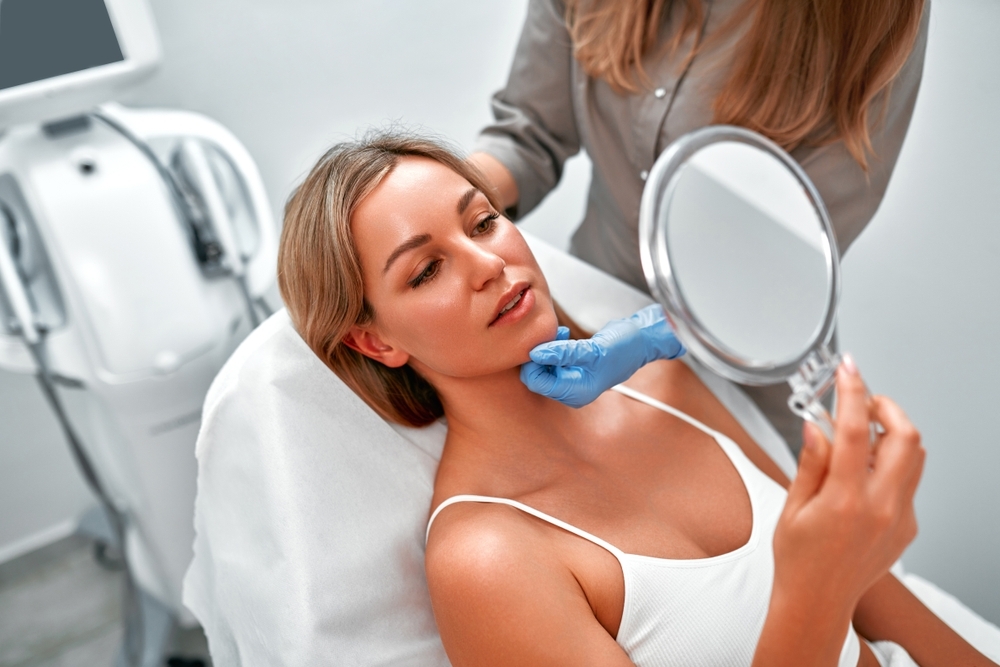
Where Botox relaxes muscles, Juvederm restores volume. This injectable gel is made from hyaluronic acid, a naturally occurring substance that helps keep skin plump and hydrated.
As you age, hyaluronic acid levels decline, contributing to hollowed areas, deepening folds, and an overall loss of facial fullness. Juvederm replenishes that volume by injecting the gel directly into targeted areas of the face.
Because the results are immediate, patients often leave their appointment already seeing the difference. Juvederm was FDA-approved in 2006, and the Juvederm XC formulation is designed to provide a smooth, natural look while improving patient comfort during the injection.
What Juvederm Treats Best
Juvederm is particularly effective for nasolabial folds, the creases that run from the bottom of the nose to the corners of the mouth. It’s also commonly used to add volume to the lips, contour the cheeks and chin, and smooth deeper static lines that remain visible even when the face is at rest. If your primary concern is volume loss or folds that don’t change with expression, Juvederm is typically the better fit.
What to Expect During and After Treatment
A Juvederm treatment takes approximately 15 minutes from start to finish. Results are visible right away, and most patients experience only minimal downtime.
Mild side effects at the injection site, including temporary redness, swelling, tenderness, or bruising, are possible but generally short-lived. Results from Juvederm XC can last up to 1 year, making it a longer-lasting option than Botox.
Can You Use Both?
Many patients find that combining Botox and Juvederm gives them more comprehensive results than either treatment alone. Because each addresses a different concern, they can be used together to target multiple areas of the face without any conflict.
For example, a patient might use Botox to smooth crow’s feet while using Juvederm to fill nasolabial folds and add volume to the lips. Dr. Martén evaluates each patient individually and can help you determine whether a single treatment or a combination approach best matches your goals.
Which One is Right for You?

The best way to decide between Botox and Juvederm is to identify which type of lines or changes bother you most. Ask yourself: do the lines appear mainly when I’m making expressions, or are they visible even when my face is relaxed? Are my concerns about movement and muscle activity, or about volume and fullness?
If your lines deepen when you raise your eyebrows or squint, Botox is likely the better starting point. If you’re noticing sagging, hollowness, or folds that don’t respond to expression, Juvederm is worth exploring.
And if both concerns apply, a combination approach at South Texas Eye Institute may offer the most satisfying outcome. A consultation with Dr. Martén is the most reliable way to get a clear answer. She can assess your facial structure, listen to your goals, and recommend the right treatment for your specific situation.
If you’re ready to explore your options, schedule a consultation at South Texas Eye Institute in San Antonio, TX, today!