
If you have been diagnosed with glaucoma, or your eye doctor has told you that you are at higher risk for it, you may be wondering how often you really need to come in. A yearly exam sounds reasonable for most people, but glaucoma doesn’t keep a calendar. It damages vision slowly and without warning signs, which changes what regular monitoring needs to look like.
For most patients living with glaucoma, an annual exam is the minimum requirement rather than the goal. Many people need to be seen more often than once a year, and the right schedule depends on how advanced the condition is and how well it is responding to treatment.
Keep reading to learn more about how glaucoma affects your exam schedule, what happens during a monitoring visit, and how to tell whether you should be seen more than once a year.
Why Glaucoma Changes How Often You Need Eye Exams
Glaucoma is a group of conditions that damage the optic nerve, usually because pressure inside the eye is higher than the nerve can tolerate. The most common form, primary open-angle glaucoma, comes on so gradually that most people feel nothing at all in the early stages.
The damage tends to start at the edges of your vision, so it can progress for years before you notice anything is wrong. By the time your peripheral vision feels noticeably different, some of that loss is already permanent.
That is why routine monitoring matters so much with this condition. There is no reliable warning system you can count on at home.
The only way to catch progression in time to act on it is to measure what is happening inside the eye on a regular basis. An experienced eye doctor can detect small shifts in your optic nerve or your eye pressure long before those changes reach your day-to-day sight.
Even after diagnosis and treatment, eye pressure can drift upward over months, and a treatment that was holding the line last year may not be keeping up today. Regular visits let your eye doctor confirm that your current plan is still doing its job, and adjust it before any ground is lost.
Is Once a Year Enough?
For someone with stable, well-controlled glaucoma, a comprehensive exam once a year may be appropriate, with shorter pressure checks in between. For many other patients, once a year is not frequent enough. People with more advanced glaucoma, pressure that has been difficult to control, or a recent change in medication are often seen every three to six months.
Your eye doctor sets the interval based on your specific situation rather than a single fixed rule. The aim is to catch any movement in your condition while there is still room to respond to it.
A few factors influence how often you should be seen:
- How advanced your glaucoma is and how much optic nerve damage already exists
- Whether your eye pressure is stable or still fluctuating
- How recently your treatment was started or changed
If any of these shift, your doctor may want to see you more frequently for a while, then space your visits back out once things settle.
What Happens at a Glaucoma Monitoring Exam?
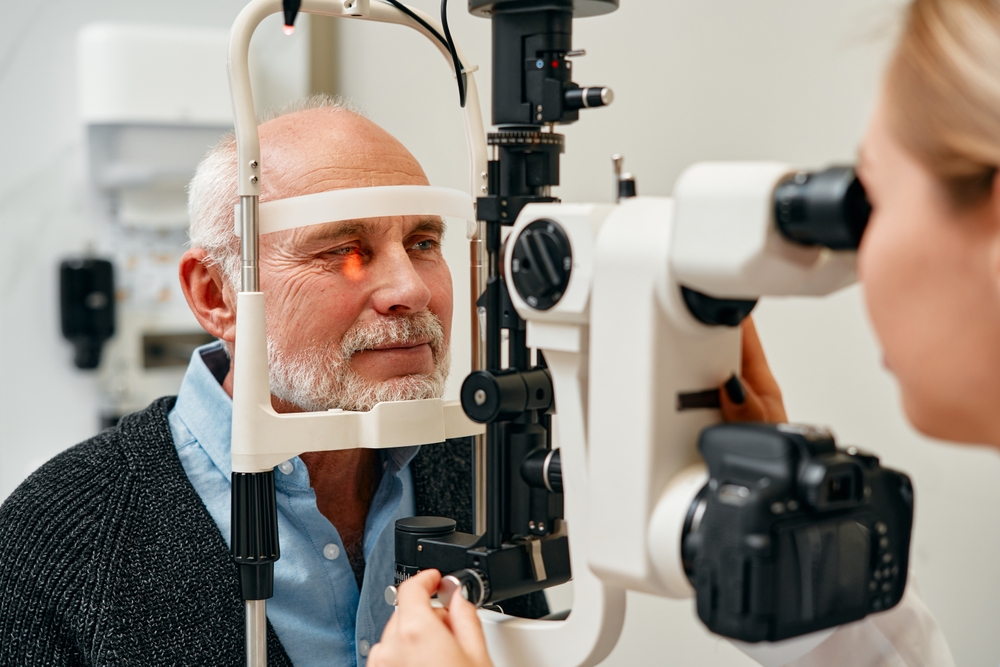
A glaucoma exam goes well beyond the vision check you might associate with updating a glasses prescription. A comprehensive eye exam for glaucoma is built to track the health of the optic nerve over time.
Your visit will usually include a measurement of your intraocular pressure, a close look at the optic nerve, and imaging that maps the nerve fiber layer so your doctor can compare it against earlier scans. Visual field testing checks your peripheral vision for any developing gaps, and a dilated eye exam gives your doctor a clear view of the optic nerve and the rest of the back of the eye.
Comparing each visit to the last is what makes monitoring work. A single pressure reading or one scan tells your doctor very little on its own. The trend across several visits is what reveals whether your glaucoma is holding stable or gradually advancing.
Should You Be Screened for Glaucoma If You Have Not Been Diagnosed?
Many people have early glaucoma and have no idea. Because the disease is painless and silent at first, a screening is often the only thing that catches it before vision is affected. A regular comprehensive exam is the most dependable way to find it early, while there are still plenty of options to protect your sight.
Certain factors raise your risk enough that routine screening becomes especially worthwhile. These include being over 60, having a family history of glaucoma, being of African American or Hispanic descent, and having higher-than-average eye pressure.
Diabetes also raises the risk of several serious eye conditions, which is one more reason consistent exams become more valuable as you get older. The board-certified ophthalmologists at South Texas Eye Institute can establish a baseline for your eyes and tell you how often you should return.
How Monitoring Keeps You Ahead of Glaucoma
When glaucoma is followed closely, your eye doctor has more options. Most cases are managed first with pressure-lowering eye drops, and regular visits confirm whether those drops are working or need to be adjusted.
If medication alone is not enough, laser treatment or glaucoma surgery can lower pressure further. Your care team reviews those options with you and explains what recovery involves well before anything is scheduled.
Fellowship-trained ophthalmologist Dr. Lisa Martén and her team match each patient’s monitoring schedule and treatment plan to the stage of their disease and how their eyes respond over time. Glaucoma cannot be reversed, but with steady monitoring it can almost always be slowed, and the vision you still have can be protected.
Preserving Your Vision Starts Here
Glaucoma rewards patients who stay consistent. Keeping your scheduled visits, even when your eyes feel completely normal, is what allows your eye doctor to step in before any change becomes permanent.
Not sure how often you should be coming in to stay ahead of your glaucoma? Talk to an expert at South Texas Eye Institute in San Antonio, TX, today!